Guide to Qualifying New Suppliers in Malaysia for Manufacturing Success
Malaysia is a premier manufacturing hub in Southeast Asia. According to the Malaysian Investment Development Authority (MIDA), “Malaysia, with its extensive trade....

By AMREP | Posted on April 30, 2026
A smartwatch is inspected by combining visual checks, functional testing, connectivity validation, battery performance evaluation, and durability testing. Quality control teams follow structured methods such as AQL sampling, real-time production monitoring, and pre-shipment inspections to ensure every device meets performance, safety, and compliance standards before it reaches the customer.
Whether you’re sourcing from Asia or scaling production globally, a structured smartwatch inspection process can prevent costly defects, protect your brand reputation, and ensure compliance with international standards.
In this guide, we break down how to inspect a smartwatch, covering essential quality control methods, testing procedures, and a practical inspection checklist.
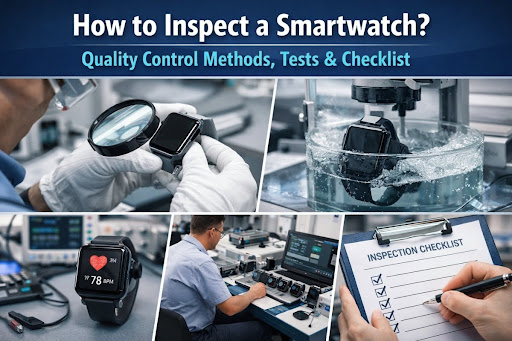
Smartwatch inspection should be conducted at critical stages of the production cycle to minimize risk and ensure consistent quality.
You should inspect when:
Early and consistent inspection reduces costly errors and ensures reliable product performance.
To ensure consistent quality, smartwatch inspection is conducted at various stages of production. Each stage serves a specific purpose in identifying and preventing defects before the product reaches the customer. Before diving into the checklist, it's important to understand the key inspection stages:
This inspection takes place before manufacturing begins. It focuses on verifying whether everything is ready for production.
Key checks include:
This stage helps prevent defects at the source and avoids costly corrections later.
Also known as in-line inspection, this is conducted when around 20–50% of production is complete.
It helps to:
By catching issues mid-production, businesses can take corrective action before the full batch is completed.
This is the most critical inspection stage and is conducted when production is 100% complete and at least 80% packed.
It involves:
This final step ensures that the correct products are shipped properly.
Key focus areas include:
This stage minimizes risks related to shipping errors and damaged goods.
Quality control methods ensure that defects are identified systematically and product consistency is maintained across large production volumes. A robust inspection process combines multiple quality control techniques:
AQL sampling is a widely used statistical method to evaluate product quality without inspecting every unit. Instead of inspecting 100% of units, inspectors use statistical sampling to:
For example, if you order 1,000 smartwatches:
This method allows buyers to make objective, data-driven decisions without inspecting every unit.
Functional testing verifies that the smartwatch operates as intended under normal usage conditions.
Common functional tests include:
These tests ensure the smartwatch performs reliably in everyday usage and delivers a seamless user experience.
Reliability testing evaluates how the smartwatch performs over time and under repeated use.
Common reliability tests include:
These tests help ensure long-term durability and consistent performance in real-world conditions.
Environmental testing ensures the smartwatch performs consistently under different external conditions such as temperature, humidity, and water exposure.
Common environmental tests include:
These tests ensure the smartwatch remains functional, durable, and reliable under real-world environmental conditions.
Compliance testing ensures that the smartwatch meets regulatory requirements for different markets.
Key standards include:
In addition to CE, FCC, and RoHS, smartwatch quality inspection should also consider broader industry standards and benchmarks, including:
These standards help ensure not only regulatory compliance but also consistent product quality, safety, and reliability across global markets.
Beyond testing, effective quality control includes continuous monitoring of production processes. This approach focuses on identifying defect patterns, addressing root causes, and implementing corrective and preventive actions.
By shifting from reactive inspection to proactive quality management, businesses can improve consistency, reduce defects, and enhance overall production efficiency.
Below is a comprehensive electronics inspection checklist used by professional quality inspectors:
This checklist is used during pre-shipment inspection to ensure smartwatch quality before delivery.
After inspection, you receive a detailed report that provides complete visibility into product quality.
A standard inspection report includes:
This report helps you make informed decisions before approving shipment.
During inspections, these are the most frequently identified issues:
Identifying these early can save thousands in returns and replacements.
To ensure consistent quality, follow these proven strategies:
Choose manufacturers with:
To ensure your supplier meets international standards, learn how to verify an ISO certified company before moving forward with production.
Provide detailed requirements:
To ensure product reliability under real-world conditions, explore our guide on thermal and environmental testing in electronics.
Independent inspection partners help:
Don’t rely only on final inspections:
Partnering with a professional inspection company allows you to:
More importantly, it shifts your approach from:
“Fixing problems after delivery” to
“Preventing problems before they happen.”
Smartwatch inspection is essential to ensure product quality, performance, and reliability. To consistently meet the highest quality standards before your products reach customers, a structured and reliable inspection process is critical. With AMREP Inspect’s on-ground quality inspection services, you can detect defects early, maintain compliance, and gain full visibility into your production.
Whether you’re manufacturing in Mexico, Vietnam, Malaysia, or Thailand, our experts help you reduce risk, prevent costly returns, and protect your brand reputation.
Typically, a pre-shipment inspection takes one day, depending on sample size and testing requirements.
Common issues include battery problems, touchscreen defects, and connectivity failures.
Yes, especially when manufacturing overseas, as it ensures unbiased quality verification and reduces risk.
The shipment is either rejected or requires rework before approval.
Contact Us To See What We Can Do
Call Us
Mon - Sat 9.00 - 18.00
Sunday Closed


12 - May 2025
12
May
2025
Malaysia is a premier manufacturing hub in Southeast Asia. According to the Malaysian Investment Development Authority (MIDA), “Malaysia, with its extensive trade....

22 - April 2025
22
April
2025
Healthcare is rapidly evolving, ensuring consistent and high-quality patient care. Total Quality Management (TQM) in healthcare is more than just a buzzword—it is a powerful....

16 - April 2025
16
April
2025
Total Quality Management (TQM) is a mindset that involves everyone in the organization working toward a common goal: achieving excellence through quality. From....


Our website uses cookies to improve your experience. Read our Cookie Policy for more information.