Guide to Qualifying New Suppliers in Malaysia for Manufacturing Success
Malaysia is a premier manufacturing hub in Southeast Asia. According to the Malaysian Investment Development Authority (MIDA), “Malaysia, with its extensive trade....

By AMREP | Posted on April 28, 2026
As cities become more congested and sustainability takes center stage, e-bikes have emerged as a practical and efficient alternative to traditional transportation.
To meet this growing demand, many businesses turn to China, known for its mature supply chains, advanced production capabilities, and cost-efficient pricing. This makes China an attractive destination for sourcing high-quality e-bikes at scale.
However, importing e-bikes is not without its challenges. Businesses often face production risks, inconsistent quality, regulatory compliance issues, and supply chain disruptions that can directly impact profitability and damage brand reputation if not properly managed.
This guide breaks down the key risks involved in sourcing e-bikes from China and offers practical strategies to help you maintain product quality, ensure compliance, and build a more reliable and resilient supply chain.
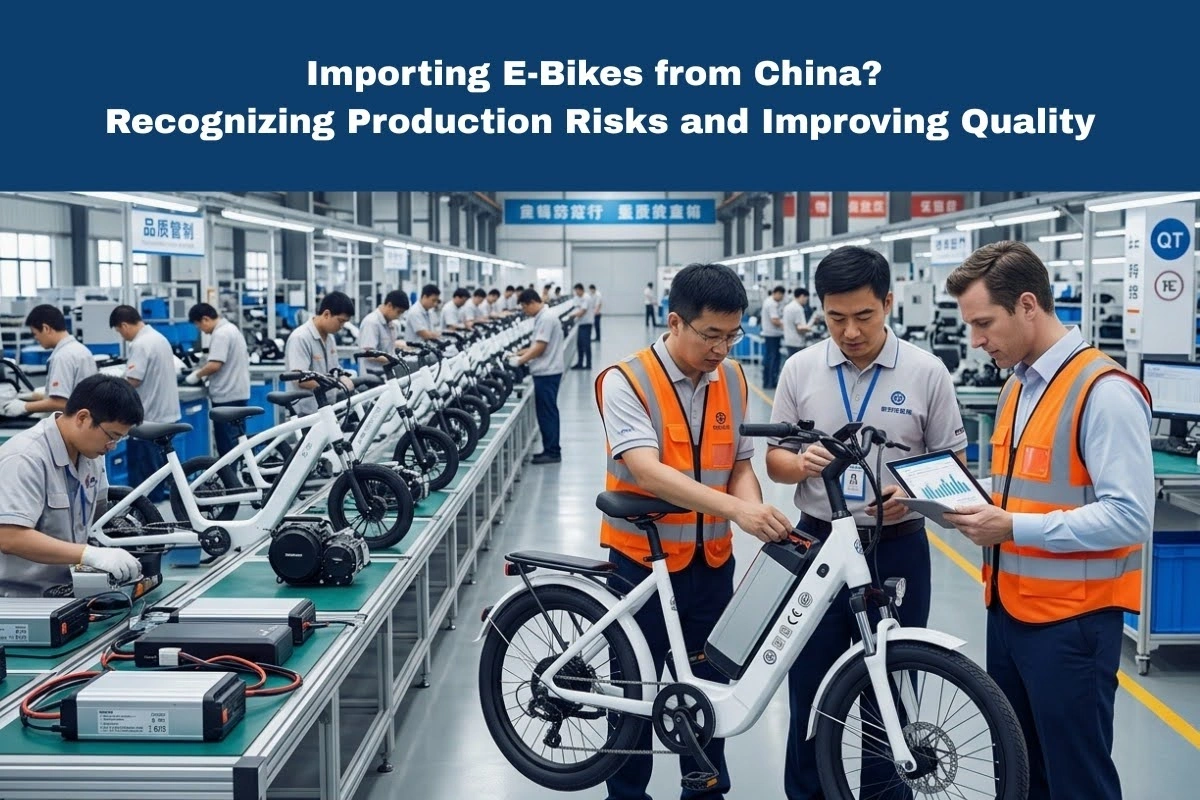
Before exploring the potential risks, it’s important to first understand why China continues to dominate as the leading global sourcing hub for e-bikes.
Chinese manufacturers benefit from economies of scale, allowing them to produce e-bikes at significantly lower costs compared to Western countries.
China has a mature ecosystem for e-bike production, including battery manufacturers, motor suppliers, and component producers, all integrated into a seamless supply chain.
Many Chinese factories offer OEM (Original Equipment Manufacturer) and ODM (Original Design Manufacturer) services, enabling businesses to customize designs, features, and branding.
Manufacturers can handle bulk orders efficiently, making China an ideal choice for scaling businesses.
However, these advantages come with potential risks that must be carefully managed.
Importing e bikes from China can be a highly profitable opportunity, but it requires careful planning, supplier verification, and strict quality control to avoid costly mistakes. A structured approach ensures smooth operations, compliance, and consistent product quality.
Having detailed specifications helps avoid misunderstandings with suppliers and ensures consistency.
Reliable suppliers reduce risks related to quality and delays.
Non compliance can lead to shipment rejection or legal issues.
Clear agreements help prevent disputes and unexpected costs.
Quality control should be integrated throughout the production process.
This minimizes defects and ensures product consistency.
Efficient logistics planning is essential for timely delivery.
Understanding customs procedures helps avoid delays.
A successful import strategy includes post delivery planning.
Importing e-bikes from China is not just about finding the lowest price, it is about building a reliable supply chain that ensures quality, compliance, and long term success. With the right strategies in place, businesses can reduce risks, improve efficiency, and capitalize on the growing demand for e bikes.
Importing e-bikes from China offers significant advantages, but it also comes with a range of production risks that can impact quality, safety, and overall business success if not properly managed.
E-bike batteries, typically lithium-ion, are critical components and pose significant safety risks if not properly manufactured.
Battery failures can lead to product recalls, legal liabilities, and severe damage to brand reputation.
Different markets have strict regulations for e-bikes, including safety, electrical standards, and environmental requirements.
Not all suppliers are equal. Some may lack experience, transparency, or the capacity to deliver consistent quality.
Potential Issues:
When sharing designs and specifications, there is always a risk of intellectual property theft.
Concerns:
Global events, logistics issues, and raw material shortages can impact production timelines.
Examples:
Language differences and cultural gaps can lead to misunderstandings in specifications, expectations, and timelines.
To successfully import e-bikes from China, businesses must implement robust risk management strategies.
Before selecting a supplier, perform comprehensive background checks.
Steps:
Quality control should not be an afterthought; it must be integrated throughout the production process.
Types of Inspections:
Ambiguity leads to errors. Provide detailed and precise specifications to manufacturers.
Include:
Work with suppliers who understand international compliance requirements.
Best Practices:
Safeguard your designs and brand.
Strategies:
Clear communication reduces misunderstandings.
Tips:
Independent inspection companies can provide unbiased quality assessments.
Benefits:
Efficient logistics planning ensures timely delivery.
Considerations:
Beyond risk mitigation, businesses should focus on continuous quality improvement.
Develop a quality checklist tailored to your product.
Include:
Testing ensures durability, safety, and performance.
Types of Tests:
Reliable partnerships lead to better outcomes.
Benefits:
Do not rely solely on final inspections.
Approach:
Given the critical role of batteries, prioritize their quality.
Recommendations:
Proper packaging prevents damage during transit.
Consider:
To gain a clearer understanding of quality management standards and their practical impact, explore ISO 9000 vs ISO 9001 and the key differences between them.
In the process of importing e-bikes from China, even the smallest oversights can lead to major setbacks. Avoiding the following common mistakes can save both time and money while protecting your brand reputation:
Opting for the lowest-cost supplier may seem attractive initially, but it often results in inferior materials, poor workmanship, and higher long-term costs due to defects and returns.
Skipping inspections at any stage of production increases the risk of receiving defective or non-compliant products. Regular checks are essential to maintain consistency and reliability.
Failing to meet regulatory requirements can lead to shipment rejections, legal issues, and delays in market entry. Compliance should always be verified before production and shipment.
Unclear instructions or assumptions can cause costly misunderstandings. Precise, documented communication is key to ensuring your requirements are properly executed.
Relying on a single supplier or logistics route can be risky. Unexpected disruptions can halt your operations, so it’s important to have contingency plans and alternative partners in place.
To ensure your suppliers are truly compliant and avoid costly risks, read how to verify an ISO certified company with practical steps for reliable verification.
A mid-sized company sourced e-bikes from a Chinese manufacturer offering highly competitive pricing. Initial samples were excellent, but upon receiving the bulk shipment, they discovered:
As a result, the company faced product recalls, financial losses, and reputational damage.
Modern technology is transforming quality control from a reactive process into a proactive, data-driven system that improves accuracy, efficiency, and consistency across production.
Leverage mobile and cloud-based inspection apps to capture real-time data, standardize reporting, and instantly share results with stakeholders. This reduces human error and speeds up decision-making.
Use IoT-enabled sensors and devices to continuously monitor production conditions and product performance. This allows for early detection of issues, minimizing defects and downtime.
Apply advanced analytics to identify defect patterns, uncover root causes, and optimize processes. Data-driven insights help manufacturers continuously improve quality and reduce waste.
The e-bike industry is advancing at a remarkable pace. Today’s manufacturers are moving beyond traditional production, engineering smart, efficient, and eco conscious mobility solutions that redefine modern transportation.
Automation is reshaping production lines by improving precision, speed, and consistency. Advanced robotics and AI-driven machinery are being used for frame welding, battery assembly, and quality inspections, significantly reducing human error and production defects. Automated systems also enable scalable manufacturing, allowing suppliers to meet growing global demand without compromising quality.
Sustainability is becoming a core priority rather than an option. Manufacturers are increasingly adopting eco-friendly materials such as recyclable aluminum frames and low-impact battery components. Energy-efficient production processes, reduced carbon emissions, and responsible sourcing of raw materials are also gaining traction. Brands that prioritize green manufacturing not only meet regulatory requirements but also appeal to environmentally conscious consumers.
The integration of IoT and AI is transforming e-bikes into connected, intelligent devices. Modern e-bikes now feature GPS tracking, mobile app connectivity, real-time diagnostics, and predictive maintenance alerts. AI-powered systems can optimize battery usage, adapt motor assistance based on riding behavior, and enhance safety through features like anti-theft systems and crash detection. This shift is elevating the overall user experience and redefining how riders interact with their bikes.
Importing e-bikes from China offers immense opportunities for businesses looking to capitalize on the growing demand for sustainable transportation. However, success depends on effectively managing production risks and ensuring consistent product quality.
Quality should never be compromised for cost savings. A strategic approach to sourcing and production management not only protects your investment but also strengthens your brand reputation in an increasingly competitive market.
Ultimately, the key to success lies in proactive planning, continuous monitoring, and a commitment to excellence. With the right strategies in place, importing e-bikes from China can be a highly profitable and sustainable venture.
At AMREP Inspect, we help businesses overcome these challenges with confidence. Our expert Quality Inspection Services, auditing, and quality management solutions ensure that your e bikes meet the highest standards before they reach your customers, protecting your brand, your investment, and your reputation.
Contact Us To See What We Can Do
Call Us
Mon - Sat 9.00 - 18.00
Sunday Closed

12 - May 2025
12
May
2025
Malaysia is a premier manufacturing hub in Southeast Asia. According to the Malaysian Investment Development Authority (MIDA), “Malaysia, with its extensive trade....

22 - April 2025
22
April
2025
Healthcare is rapidly evolving, ensuring consistent and high-quality patient care. Total Quality Management (TQM) in healthcare is more than just a buzzword—it is a powerful....
16 - April 2025
16
April
2025
Total Quality Management (TQM) is a mindset that involves everyone in the organization working toward a common goal: achieving excellence through quality. From....


Our website uses cookies to improve your experience. Read our Cookie Policy for more information.