Guide to Qualifying New Suppliers in Malaysia for Manufacturing Success
Malaysia is a premier manufacturing hub in Southeast Asia. According to the Malaysian Investment Development Authority (MIDA), “Malaysia, with its extensive trade....

By AMREP | Posted on January 29, 2026
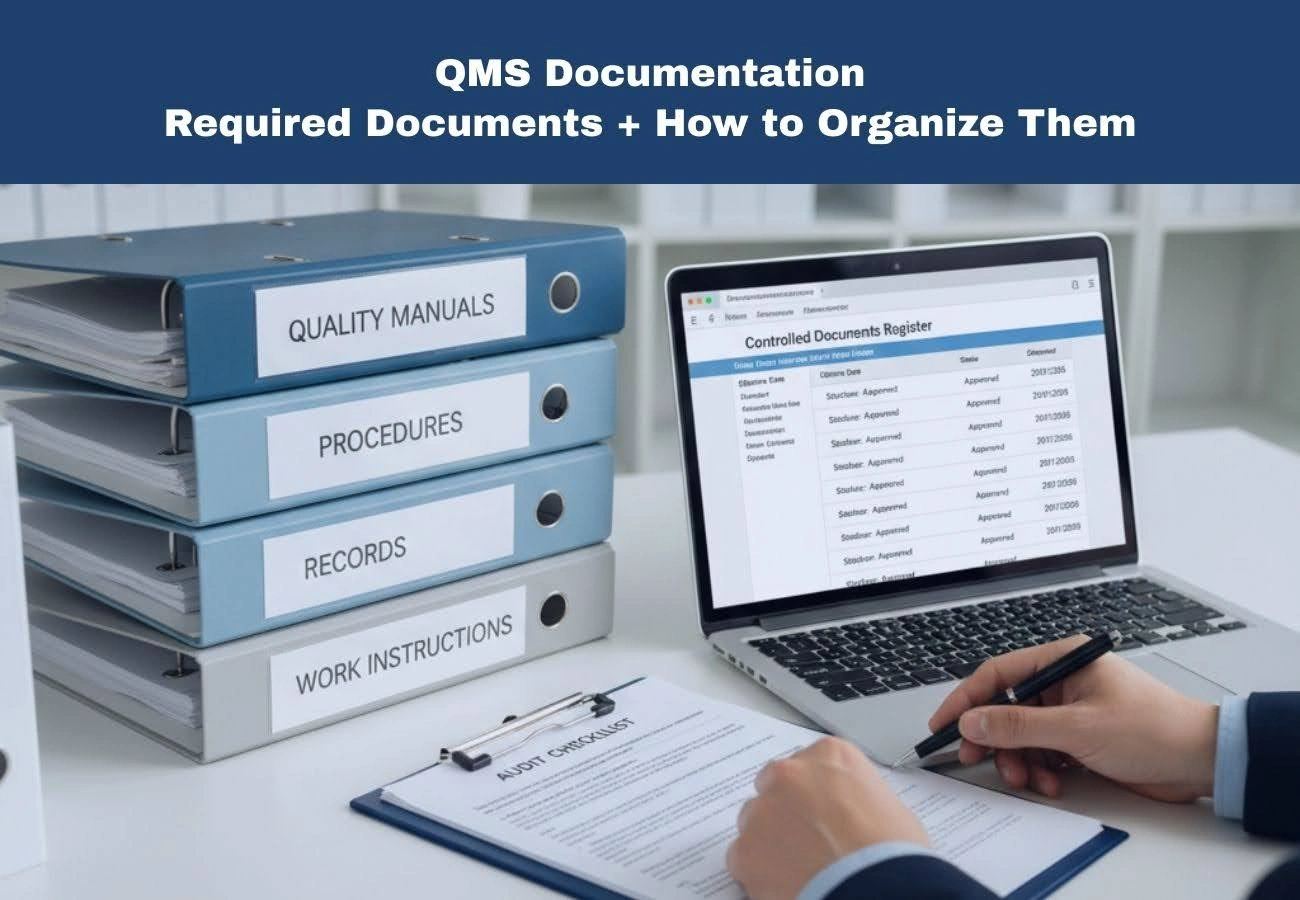
Effective quality management starts with clarity. Clear documentation defines how work is performed, how quality is controlled, and how improvement is sustained across an organization. Without a structured documentation system, quality efforts become inconsistent, difficult to manage, and hard to defend during audits.
Implementing or improving a Quality Management System to meet standards such as ISO 9001, ISO 13485, or IATF 16949 requires a clear understanding of documentation requirements and effective organization methods.
This guide explains:
QMS documentation is the structured set of policies, procedures, processes, records, and supporting materials that define how an organization ensures quality in its products or services.
At its core, QMS documentation answers four key questions:
Modern quality standards place greater emphasis on documented information instead of fixed document lists. Despite this shift auditors and regulators still expect certain documents to exist and be well managed.
Effective documentation is not just about passing audits. It delivers real business value:
Poor documentation, on the other hand, leads to confusion, rework, nonconformities, and audit findings.
Before diving into required documents, it’s important to understand the main categories of QMS documentation.
High-level statements that define intent and direction.
Describe how processes are carried out across the organization.
Detailed, task-level instructions for specific activities.
Evidence that processes were performed as planned.
Standardized tools used to capture records.
While requirements vary by standard and industry, the following documents are widely expected in a compliant QMS.
The Quality Policy is the foundation of the QMS.
It should:
This document is usually short, often one page but auditors will check that it is actively used not just posted on a wall.
Quality objectives translate the policy into measurable goals.
They should:
Objectives may be documented in a standalone document or integrated into management review records.
This document defines:
A clear scope prevents confusion during audits and ensures expectations are aligned.
This is one of the most critical procedures in a QMS.
It defines how you:
Auditors will often trace a document’s lifecycle to test this procedure.
Records are different from documents; they are evidence and usually cannot be changed.
This procedure defines:
Without clear record control, organizations struggle to prove compliance.
Most modern QMS standards require risk-based thinking.
This can include:
The emphasis is not on the tool but on demonstrating proactive risk management.
These procedures define how core business processes operate, such as:
Not all procedures must be documented, but critical and high-risk processes usually are.
This procedure explains how the organization:
Auditors pay close attention to how problems are handled and prevented from recurring.
Internal audits ensure the QMS is functioning as intended.
This document defines:
Internal audit records are often reviewed in detail during certification audits.
Management review demonstrates leadership involvement.
Documentation should show:
Records matter more than the procedure itself here.
Beyond the core set, organizations often maintain additional documents depending on complexity and industry.
Examples include:
These documents help demonstrate effective control over operations.
A well-structured QMS follows a logical hierarchy.
High-level intent and direction
Process-level instructions
Task-level details
Evidence of execution
Not every organization needs all four levels for every process, but the hierarchy helps keep documentation clear and usable.
Having the right documents is not enough. Effective organization is what makes a QMS usable, efficient, and sustainable.
Common structuring options include:
Choose one primary structure and stick to it.
Consistent naming makes documents easier to find and control.
Example format:
Include:
Every controlled document should show:
Never rely on file names like “Final_v3_reallyfinal.docx”.
Each document should have an owner responsible for:
Ownership prevents documentation from becoming outdated.
Avoid storing QMS documents across personal drives and email inboxes.
Options include:
Centralization improves access, control, and audit readiness.
Not everyone needs editing rights.
Best practice:
This protects document integrity.
Overdocumentation is a common mistake.
Good QMS documents are:
If employees avoid your procedures, they are not effective no matter how compliant they look.
Audits do not require perfection but they do require clarity and consistency.
To stay audit-ready:
Auditors care less about fancy formatting and more about effectiveness.
For companies working with suppliers in Southeast Asia, understanding local audit expectations is essential, as outlined in QMS Auditing in Indonesia: Ensuring Supplier Capability and Compliance.
QMS documentation is not static.
Strong organizations:
Continuous improvement applies to documentation just as much as processes.
Audit requirements can vary by location, and organizations working in India may benefit from the guidance provided in How to Conduct a QMS Audit in India?.
QMS documentation is often seen as a burden but when done right it becomes a powerful tool for consistency compliance and improvement.
Focus on:
A well documented QMS does not just pass audits it helps the business run better every day.
At AMREP, we help organizations turn documentation into a practical and effective Quality Management System that supports real world operations. The right structure and approach simplify audits, strengthen process control, and drive continual improvement. With expert guidance and inspection support, quality becomes a business advantage not just a requirement.
Contact Us To See What We Can Do
Call Us
Mon - Sat 9.00 - 18.00
Sunday Closed


12 - May 2025
12
May
2025
Malaysia is a premier manufacturing hub in Southeast Asia. According to the Malaysian Investment Development Authority (MIDA), “Malaysia, with its extensive trade....

22 - April 2025
22
April
2025
Healthcare is rapidly evolving, ensuring consistent and high-quality patient care. Total Quality Management (TQM) in healthcare is more than just a buzzword—it is a powerful....
16 - April 2025
16
April
2025
Total Quality Management (TQM) is a mindset that involves everyone in the organization working toward a common goal: achieving excellence through quality. From....


Our website uses cookies to improve your experience. Read our Cookie Policy for more information.