Guide to Qualifying New Suppliers in Malaysia for Manufacturing Success
Malaysia is a premier manufacturing hub in Southeast Asia. According to the Malaysian Investment Development Authority (MIDA), “Malaysia, with its extensive trade....

By AMREP | Posted on April 30, 2026
The global shift toward sustainable transportation has accelerated the growth of the e bike industry. As demand rises across urban and suburban markets, manufacturers are under increasing pressure to deliver high quality, reliable, and compliant products at scale. E-bike production is far more complex than traditional bicycle manufacturing. It combines mechanical engineering, electrical systems, battery technology, and software integration into a single product.
This complexity introduces multiple points of failure. Without a structured approach to quality, even small defects can lead to safety issues, product recalls, and reputational damage.
This comprehensive guide explores the full e bike manufacturing process, highlights key quality risks, and explains how in process inspections help ensure consistent product performance and compliance.
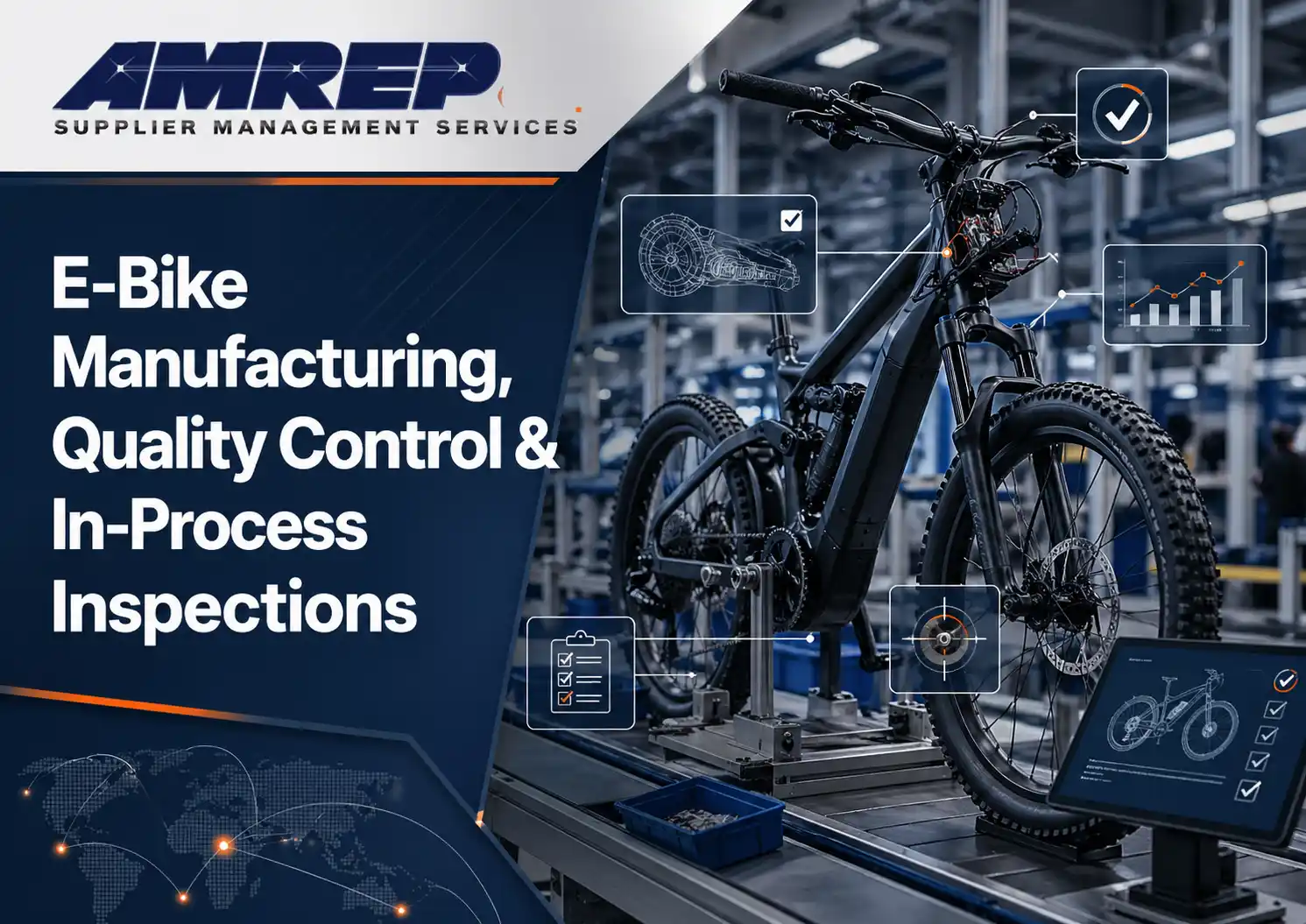
E bike manufacturing involves several interconnected stages, each requiring precision and strict quality oversight.
The frame forms the backbone of the e bike. Manufacturers typically use aluminum alloys for their strength and lightweight properties. The process includes tube cutting, forming, welding, and surface finishing.
Common risks include poor weld quality, frame misalignment, and surface defects. Even minor inconsistencies can affect durability and rider safety.
The battery is one of the most critical and sensitive components. Lithium ion cells are assembled into packs and integrated with a Battery Management System to regulate performance and safety.
Key risks include overheating, inconsistent cell performance, and faulty wiring. Poor battery quality can lead to serious safety hazards.
E bikes use either hub motors or mid drive systems. Motors are tested for torque output, efficiency, and durability.
Potential issues include power inconsistency, excessive noise, and reduced lifespan due to poor component quality.
Controllers, sensors, wiring harnesses, and displays are installed to manage performance and user interaction.
Risks include faulty connections, inaccurate sensor readings, and software integration issues.
All components are assembled into a finished product. This includes brakes, drivetrain, wheels, and accessories.
Errors at this stage can include improper torque application, loose components, and misaligned parts.
Quality control is the foundation of reliable and safe e bike production. It ensures that every unit meets defined standards for performance, durability, and regulatory compliance before reaching the market. More importantly, effective quality control is not just about identifying defects after they occur, it focuses on preventing issues throughout the entire manufacturing process.
A well structured quality control system delivers multiple benefits:
Quality should be integrated into every stage of production, from raw material inspection to final testing. When quality is built into the process rather than inspected at the end, manufacturers can achieve higher efficiency, lower risk, and more sustainable growth.
To maintain consistent quality, manufacturers implement multiple layers of quality control throughout production.
Raw materials and components are inspected before entering production. This includes frames, battery cells, motors, and electronic parts.
Inspections are carried out during manufacturing to detect defects early. This reduces waste and prevents defective products from moving to the next stage.
Finished e bikes are tested for functionality, safety, and appearance before shipment.
Bulk orders are checked to ensure they meet agreed specifications and quality standards.
In process inspections are the backbone of effective quality management. They allow manufacturers to identify issues at the source and take corrective action immediately.
In process inspections play a vital role in maintaining high quality standards throughout production.
To be effective, in process inspections must be strategically placed at critical stages of manufacturing where defects are most likely to occur.
Frame welding is crucial to the structural integrity of the e bike. Inspections at this stage focus on weld strength, alignment, and overall frame geometry.
The battery system is one of the most sensitive components and requires strict quality checks.
Motor performance directly impacts the functionality of the e bike.
E bikes rely heavily on electronic systems for operation and control.
During final assembly, all components must be installed correctly to ensure safety and performance.
Understanding common defects helps manufacturers design better quality control systems.
Mechanical defects affect the structural integrity and physical performance of the e bike, often posing serious safety risks.
Electrical issues are among the most critical, as they can lead to performance failures or hazardous situations.
While cosmetic defects may not always affect functionality, they play a major role in customer perception and brand value.
Functional defects directly impact how the e bike performs and the overall user experience.
Addressing these defects through structured quality control, in process inspections, and rigorous testing helps manufacturers deliver reliable, safe, and high quality e bikes that meet both market expectations and regulatory standards.
Testing is essential to validate performance, safety, and durability.
Performance testing evaluates how effectively an e bike operates under normal and demanding conditions.
Safety testing focuses on protecting riders and ensuring compliance with essential safety requirements.
Durability testing ensures that the e bike can withstand prolonged use and varying environmental conditions.
Compliance testing verifies that e bikes meet international regulatory standards required for global markets.
By implementing these testing methods, manufacturers can improve product reliability, reduce failure rates, and ensure their e bikes meet both customer expectations and regulatory requirements.
Modern technology has fundamentally transformed quality control in e bike manufacturing, shifting it from a manual, reactive process to a smart, data driven system. By integrating advanced tools and digital solutions, manufacturers can monitor production in real time, detect issues early, and continuously improve product quality.
Digital inspection tools streamline quality checks and improve accuracy across the production process.
IoT technology provides real time visibility into manufacturing operations and equipment performance.
Data analytics plays a key role in driving continuous improvement and long term quality optimization.
By leveraging these technologies, manufacturers can move beyond traditional quality control methods and build a proactive, intelligent system that ensures consistent product quality, reduces defects, and strengthens operational performance.
Quality begins at the source, with the supplier. Selecting dependable partners and managing them effectively is essential for achieving consistent product quality, minimizing risks, and maintaining a stable supply chain. A strong supplier base ensures that materials and components meet specifications from the outset, reducing the likelihood of defects during production.
A well structured supplier quality management approach focuses on setting clear expectations, continuously monitoring performance, and fostering long term collaboration.
Strong supplier management not only reduces production risks but also improves consistency, enhances efficiency, and supports long term business growth.
Proper records allow manufacturers to track every stage of production, quickly identify issues, and demonstrate adherence to regulatory and customer requirements.
A strong documentation system not only supports internal quality management but also plays a critical role during audits, certifications, and market approvals.
Maintaining clear, organized, and up to date documentation enables faster issue resolution, improves transparency across the supply chain, and ensures smooth compliance with global quality and regulatory standards.
Maintaining consistent quality in e bike manufacturing is increasingly complex as production scales and technologies evolve. Manufacturers must manage multiple variables across the supply chain, production floor, and regulatory landscape, all of which can impact product performance and reliability.
Addressing these challenges requires a proactive, well structured quality management system that focuses on prevention, monitoring, and continuous improvement.
Achieving consistent and reliable quality in e bike manufacturing requires more than inspections, it demands a disciplined and systematic approach across all stages of production.
Consistency is the foundation of effective quality control. When these practices are applied systematically, manufacturers can reduce defects, improve efficiency, and deliver products that meet both customer expectations and regulatory standards.
Third party inspection services play a crucial role in ensuring product quality, especially when manufacturing is outsourced or geographically distant. These independent experts provide unbiased evaluations, helping businesses maintain control over quality without being physically present at the production site.
By acting as an additional layer of quality assurance, third party inspection services help businesses protect their investment, maintain brand reputation, and ensure consistent product quality across every shipment.
Ensuring your suppliers truly meet required standards is critical, and our guide on how to verify an ISO certified company walks you through practical steps to validate certifications with confidence.
The future of quality control in e bike manufacturing is being shaped by rapid technological advancements and a growing focus on efficiency, accuracy, and sustainability. Manufacturers are moving toward smarter, more proactive systems that not only detect defects but also prevent them before they occur.
Automation is transforming traditional inspection processes by improving speed, precision, and consistency.
The rise of connected factories is enabling real time monitoring and control of production processes.
Sustainability is becoming an integral part of quality evaluation in modern manufacturing.
Data driven technologies are shifting quality control from reactive to predictive.
By adopting these emerging trends, manufacturers can build more intelligent, efficient, and resilient quality control systems that ensure consistent product excellence while staying competitive in a rapidly evolving market.
Taking a proactive approach to sourcing can make all the difference, and our guide on importing e bikes from China highlights key production risks and how to maintain consistent quality throughout the process.
E bike manufacturing is a complex process that demands precision, coordination, and strict quality control. From raw material inspection to final testing, every stage plays a critical role in ensuring product safety and performance.
In process inspections are particularly important, as they allow manufacturers to detect and resolve issues early, reducing costs and improving efficiency. Businesses that prioritize quality not only reduce risks but also build trust, enhance brand reputation, and achieve long term success in a competitive market.
At AMREP Inspect, we help businesses overcome these challenges with confidence through our Production Management Solutions. Our expert inspection, auditing, and quality management services ensure that your e bikes meet the highest standards before they reach your customers, protecting your brand, your investment, and your reputation.
Contact Us To See What We Can Do
Call Us
Mon - Sat 9.00 - 18.00
Sunday Closed


12 - May 2025
12
May
2025
Malaysia is a premier manufacturing hub in Southeast Asia. According to the Malaysian Investment Development Authority (MIDA), “Malaysia, with its extensive trade....

22 - April 2025
22
April
2025
Healthcare is rapidly evolving, ensuring consistent and high-quality patient care. Total Quality Management (TQM) in healthcare is more than just a buzzword—it is a powerful....

16 - April 2025
16
April
2025
Total Quality Management (TQM) is a mindset that involves everyone in the organization working toward a common goal: achieving excellence through quality. From....


Our website uses cookies to improve your experience. Read our Cookie Policy for more information.