Guide to Qualifying New Suppliers in Malaysia for Manufacturing Success
Malaysia is a premier manufacturing hub in Southeast Asia. According to the Malaysian Investment Development Authority (MIDA), “Malaysia, with its extensive trade....

By AMREP | Posted on February 13, 2026
Internal audits are a critical component of an effective ISO 9001 Quality Management System. They provide objective evidence that processes are working as intended, risks are controlled, and opportunities for improvement are identified before external audits or customer issues arise. Yet many organizations struggle with internal audits. Common challenges include unclear audit scope, checklist driven audits that add little value, inconsistent findings, and poor follow up on corrective actions. When done correctly, however, an ISO 9001 internal audit becomes one of the most powerful tools for improving performance and maintaining certification readiness.
This step by step guide explains how to plan, conduct, report, and follow up on ISO 9001 internal audits using a practical checklist based approach.
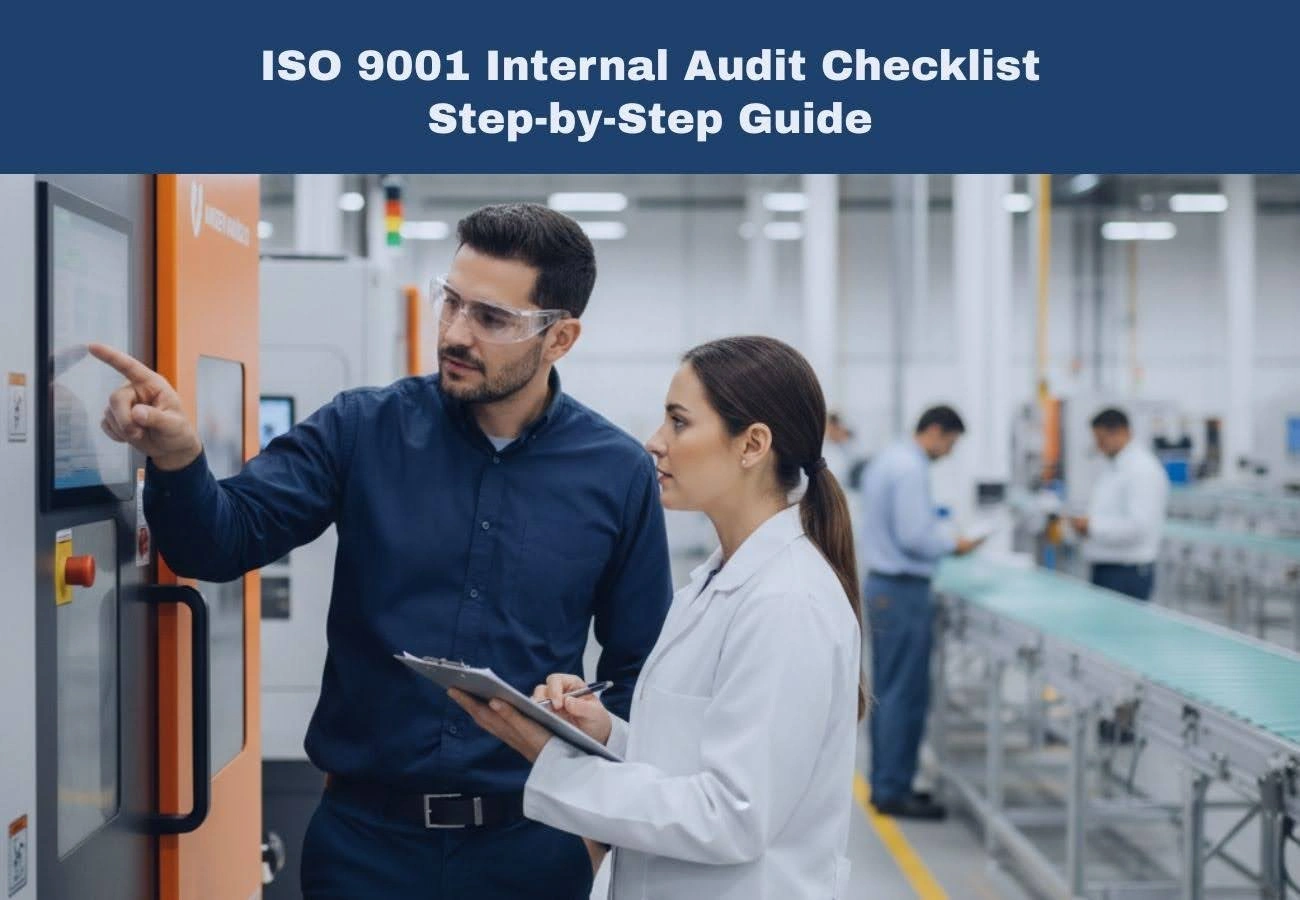
An ISO 9001 internal audit is a systematic, independent, and documented process used to determine whether the Quality Management System:
Internal audits are required under ISO 9001 Clause 9.2 and must be planned, conducted, and documented at defined intervals.
The purpose of the audit is not to find fault. It is to evaluate effectiveness, identify risks, and drive continual improvement.
A well executed internal audit helps organizations:
Auditors look closely at internal audit programs because they demonstrate how well an organization understands and controls its own system.
An internal audit checklist is a structured tool that helps auditors ensure all relevant requirements are evaluated. However, a checklist should guide the audit, not replace auditor judgment.
An effective checklist:
The checklist should evolve as the organization matures.
Follow the steps below to ensure your internal audits are properly planned, evidence based, and aligned with ISO 9001 requirements.
Before conducting individual audits, ISO 9001 requires organizations to establish an internal audit program.
Key Requirements
The audit program must define:
Risk Based Scheduling
Processes with higher risk, complexity, or customer impact should be audited more frequently. New processes, recent changes, and previous nonconformities should also influence audit planning.
ISO 9001 requires auditors to be objective and impartial.
Auditor Competence
Auditors should understand:
Formal training is recommended, but competence may also be demonstrated through experience.
Independence
Auditors should not audit their own work. When complete independence is not possible, organizations should document how objectivity is maintained.
Each internal audit must have a clearly defined scope and criteria.
Audit Scope
The scope defines what is being audited. This may include:
Audit Criteria
Audit criteria include:
Clear scope and criteria prevent audits from becoming unfocused or superficial.
Below is a structured checklist aligned with ISO 9001 clauses. Questions should be adapted to reflect organizational context.
Checklist items:
Evidence to review:
Checklist items:
Evidence to review:
Checklist items:
Evidence to review:
Checklist items:
Evidence to review:
Checklist items:
Evidence to review:
Checklist items:
Evidence to review:
Checklist items:
Evidence to review:
Opening Meeting
Explain:
Audit Execution
Use interviews, observation, and record review. Ask open ended questions such as:
Focus on effectiveness, not just documentation.
Audit findings should be clear, objective, and evidence based.
Types of Findings
Nonconformities should reference:
During the closing meeting:
Ensure management understands findings and expectations.
ISO 9001 requires organizations to:
Internal audits lose value when corrective actions are not followed through.
Records should include:
Records must be controlled and retained per organizational requirements.
Even well intentioned internal audit programs can lose effectiveness if common pitfalls are not addressed. Recognizing and avoiding these mistakes helps ensure internal audits deliver real value rather than becoming a compliance exercise.
Treating audits as a formality
Conducting audits only to satisfy ISO 9001 requirements often results in superficial findings and missed improvement opportunities.
Relying on generic checklists with no process focus
Checklists that do not reflect actual processes, risks, or organizational context limit the auditor’s ability to assess effectiveness.
Auditing documentation only
Focusing solely on documented procedures without evaluating real world implementation fails to provide a true picture of process performance.
Failing to follow up on corrective actions
When audit findings are not properly addressed or verified for effectiveness, the same issues tend to recur.
Scheduling audits without considering risk
Audits should be planned based on process criticality, previous performance, and change, not just on a fixed calendar.
Avoiding these mistakes significantly improves the credibility, effectiveness, and outcomes of internal audits.
Internal audits are only one piece of the puzzle. To fully protect quality and compliance, organizations should also focus on their supply chain, as outlined in Supplier Audits: What They Are and Why Your Business Can’t Ignore Them.
High performing organizations treat internal audits as a management tool rather than a compliance task. The following best practices help maximize the value of the internal audit process.
Use a process based audit approach
Evaluate how processes interact, how inputs are controlled, and how outputs meet requirements rather than auditing clauses in isolation.
Train and develop auditors regularly
Ongoing training improves audit consistency, questioning techniques, and understanding of ISO 9001 requirements.
Rotate auditors where possible
Auditor rotation supports objectivity, brings fresh perspectives, and reduces familiarity bias.
Integrate audits with risk management
Align internal audits with risk assessments to ensure high risk processes receive appropriate attention.
Use audit results as input to management review
Internal audit findings should directly inform leadership decisions, improvement priorities, and resource allocation.
Strong internal audits strengthen the entire Quality Management System by improving process control, identifying risks early, and driving continual improvement.
For organizations working with remote or global suppliers, effective oversight requires the right tools and approach, as outlined in How to Monitor Supplier Performance Remotely: Tools & Tactics.
An ISO 9001 internal audit is more than a compliance requirement. It is a management tool that provides insight into how well the Quality Management System is performing and where improvements are needed.
A disciplined and well executed internal audit program not only supports ISO 9001 certification but also builds confidence across the organization that quality is controlled, measured, and continuously improved.
At AMREP, we deliver Expert Auditing Services that help organizations strengthen their ISO 9001 internal audit programs and maintain ongoing compliance. Our experienced auditors provide practical insights, objective evaluations, and actionable recommendations that go beyond checklist auditing. With AMREP, internal audits become a strategic tool for improving performance, reducing risk, and building long term confidence in your Quality Management System.
Contact Us To See What We Can Do
Call Us
Mon - Sat 9.00 - 18.00
Sunday Closed


12 - May 2025
12
May
2025
Malaysia is a premier manufacturing hub in Southeast Asia. According to the Malaysian Investment Development Authority (MIDA), “Malaysia, with its extensive trade....

22 - April 2025
22
April
2025
Healthcare is rapidly evolving, ensuring consistent and high-quality patient care. Total Quality Management (TQM) in healthcare is more than just a buzzword—it is a powerful....
16 - April 2025
16
April
2025
Total Quality Management (TQM) is a mindset that involves everyone in the organization working toward a common goal: achieving excellence through quality. From....


Our website uses cookies to improve your experience. Read our Cookie Policy for more information.