Guide to Qualifying New Suppliers in Malaysia for Manufacturing Success
Malaysia is a premier manufacturing hub in Southeast Asia. According to the Malaysian Investment Development Authority (MIDA), “Malaysia, with its extensive trade....

By AMREP | Posted on January 12, 2026
In the Philippines, Pre-Shipment Inspections (PSI) are carried out by QA/QC inspectors before goods are exported. These inspections check product quality, quantity, packaging, labeling, and overall workmanship. Inspectors confirm that products match agreed specifications such as color, size, materials, and design. They also verify compliance with local and international safety and regulatory standards, including electrical safety and restricted substances requirements.
Studies show that 20–30% of international shipments face quality or compliance issues without pre-shipment inspection, resulting in delays and financial losses.
This article outlines pre-shipment inspection in the Philippines, covering inspection scope, process, and its importance for successful international trade.
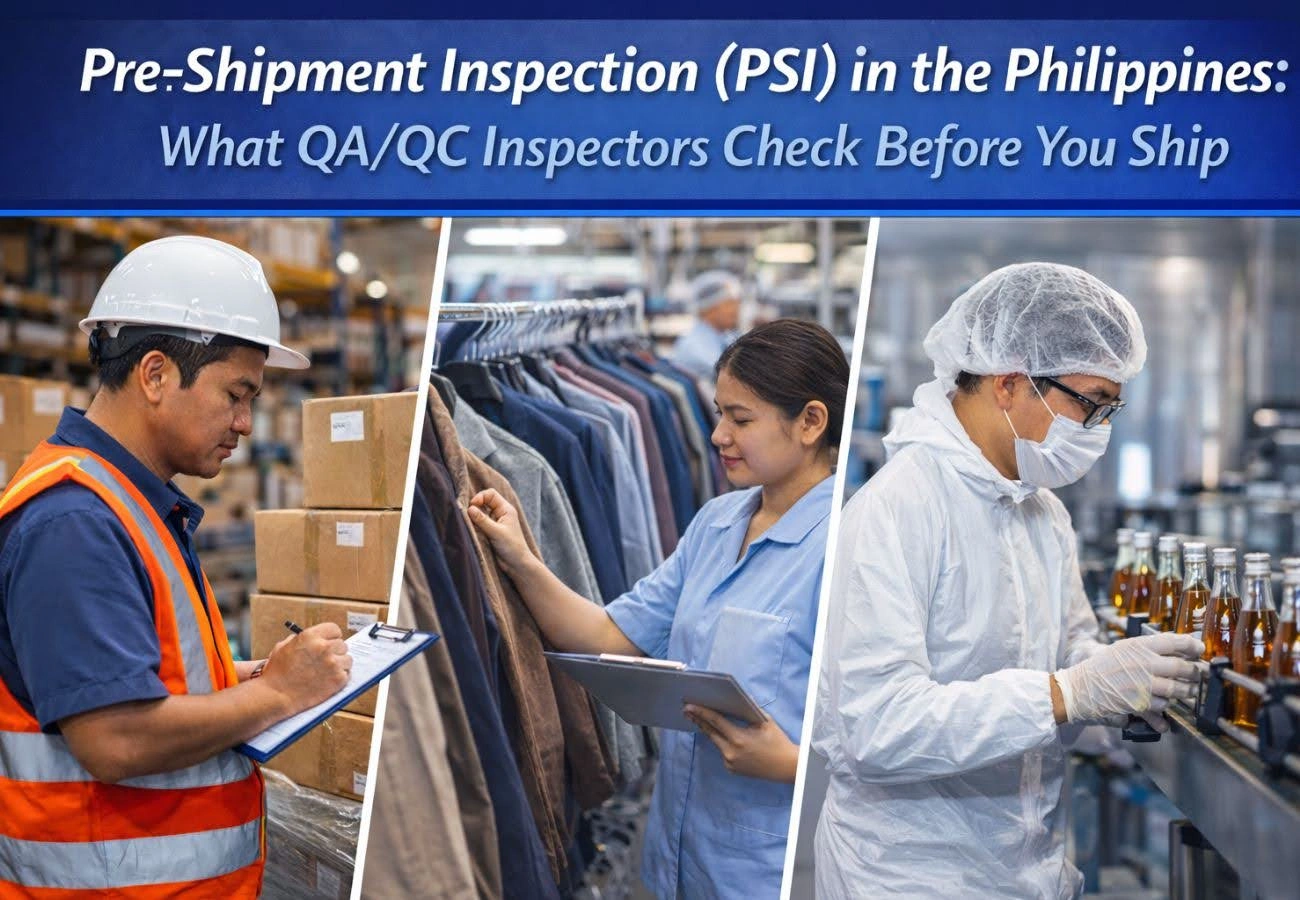
Pre-Shipment Inspection is a final quality control inspection conducted when production is 100% complete and at least 80–100% of goods are packed and ready for shipment.
The main objectives of PSI are to:
In the Philippines, PSI is typically performed by independent third-party inspection companies or in-house QA/QC teams representing the buyer.
Sourcing from the Philippines offers many advantages, including skilled labor, competitive costs, and access to key Asian trade routes. However, like any overseas sourcing destination, it also comes with quality and compliance risks that must be actively managed.
Below are the main factors that make pre-shipment inspection critical for buyers sourcing from the Philippines.
The Philippines exports a wide range of products, including:
Each sector has different quality risks, making inspection essential to ensure consistency and compliance.
Most Philippine exports are shipped to North America, Europe, the Middle East, and other parts of Asia. Without PSI, problems may only be discovered weeks later, when the shipment has already arrived, making corrections expensive or impossible.
A PSI typically costs far less than the cost of rejected shipments, rework, recalls, or damaged brand reputation.
Many buyers and governments require inspection reports to confirm that goods meet safety, labeling, or performance requirements.
Timing is crucial for an effective pre-shipment inspection. If conducted too early, the inspection may not accurately represent the final shipment. If done too late, there may be no time to fix the detected issues.
In the Philippines, PSI is usually scheduled once the supplier confirms that production is complete and packing is finished according to the agreed packing list.
PSI is carried out when:
Inspectors select samples according to internationally recognized standards such as ISO 2859-1 / ANSI AQL (Acceptable Quality Limit) to evaluate the shipment objectively.
Pre-Shipment Inspection in the Philippines follows a structured checklist. Below are the key inspection areas that QA/QC inspectors focus on.
One of the first and most fundamental checks during a pre-shipment inspection is quantity verification. Even reputable suppliers can make mistakes in packing or counting, especially for large or complex orders.
QA/QC inspectors physically verify that the shipment quantity matches the purchase order and shipping documents.
What Inspectors Check:
Why Quantity Checks Matter:
Incorrect quantities can cause inventory shortages, overpayments, delayed deliveries, or disputes with suppliers. By confirming quantities before shipment, buyers ensure they receive exactly what they paid for.
After confirming quantities, inspectors focus on overall product workmanship and appearance. This step identifies visible defects that could affect product usability, customer satisfaction, or brand perception.
Visual inspection is conducted by comparing sampled products against approved samples, specifications, or reference standards.
Common Visual Defects Checked:
Importance of Workmanship Inspection:
Visual defects are among the most common reasons for customer complaints and returns. Catching these issues before shipment helps maintain consistent quality across all delivered products.
Beyond appearance, inspectors verify that products meet the technical specifications defined in the purchase order and product drawings. Even small deviations in size or material can cause major problems for downstream use or resale.
Measurements are taken using calibrated tools to ensure accuracy and repeatability.
Typical Specification Checks:
Why Specification Accuracy Is Critical:
Products that fail to meet specifications may be incompatible with other components, fail regulatory tests, or be rejected by retailers and end customers.
Many defects cannot be detected visually. For this reason, pre-shipment inspection also includes functional and performance testing based on the product type.
Inspectors perform basic operational tests to confirm that products work as intended under normal conditions.
Examples of Functional Tests:
Value of Functional Testing:
A product that looks perfect but does not function properly can damage customer trust and increase warranty claims. Functional testing ensures reliability before products enter the market.
Compliance with safety standards and regulations is a critical part of international trade. QA/QC inspectors verify that products meet applicable safety requirements for the destination market.
While PSI does not replace laboratory testing, it helps identify obvious non-compliance issues before shipment.
Common Compliance Areas:
Consequences of Non-Compliance:
Non-compliant products may be detained by customs, recalled from the market, or permanently banned. Pre-shipment inspection helps reduce these risks by verifying compliance early.
Packaging plays a crucial role in protecting goods during transportation. Even high-quality products can be damaged if the packaging is inadequate.
During PSI, inspectors examine both inner and outer packaging to ensure it meets buyer and shipping requirements.
Packaging Elements Checked:
Why Packaging Matters:
Proper packaging minimizes damage during handling, stacking, and long-distance transportation, reducing claims and losses.
Incorrect or missing labels are a common cause of customs delays and retail rejection. Inspectors carefully check all labeling elements against buyer requirements and regulatory standards.
Labeling Items Verified:
Impact of Labeling Errors:
Even small labeling mistakes can result in shipment holds, relabeling costs, or legal penalties in the destination country.
Pre-shipment inspections are conducted using internationally recognized statistical sampling methods. This ensures that inspection results are objective, consistent, and defensible.
Most PSI inspections in the Philippines follow ISO 2859-1 or ANSI AQL standards.
How AQL Works:
Benefits of AQL Sampling:
AQL provides a balanced approach between inspection cost and quality assurance, making it suitable for large-volume shipments.
In addition to physical checks, inspectors review key documents associated with the shipment. This step ensures alignment between products, paperwork, and contractual terms.
Documents Commonly Reviewed:
Why Documentation Review Is Important:
Accurate documentation supports customs clearance, traceability, and post-shipment claims.
To understand the expertise behind effective inspections, read more about essential Quality Control Skills.
After the inspection, the buyer receives a detailed PSI report, usually within 24–48 hours. The report includes:
This report helps buyers decide whether to:
For additional insights beyond the Philippines, see our detailed overview of Pre-Shipment Inspections in Southeast Asia.
Pre-shipment inspection is widely used across multiple export sectors in the Philippines, including:
Pre-shipment inspection offers long-term value beyond a single shipment. It strengthens supplier accountability, improves product consistency, and builds confidence in the supply chain.
Key benefits are:
Pre-shipment inspection ensures quality and compliance while reducing shipment risks when sourcing from the Philippines. AMREP Inspect provides reliable and independent quality inspection services to help importers maintain full control over their shipments. With experienced QA/QC inspectors and internationally recognized inspection standards, we support informed shipping decisions and consistent supply chain performance.
Partner with AMREP Inspect today to schedule your pre-shipment inspection and ensure your goods meet quality and compliance requirements before they ship.
Contact Us To See What We Can Do
Call Us
Mon - Sat 9.00 - 18.00
Sunday Closed

12 - May 2025
12
May
2025
Malaysia is a premier manufacturing hub in Southeast Asia. According to the Malaysian Investment Development Authority (MIDA), “Malaysia, with its extensive trade....

22 - April 2025
22
April
2025
Healthcare is rapidly evolving, ensuring consistent and high-quality patient care. Total Quality Management (TQM) in healthcare is more than just a buzzword—it is a powerful....
16 - April 2025
16
April
2025
Total Quality Management (TQM) is a mindset that involves everyone in the organization working toward a common goal: achieving excellence through quality. From....


Our website uses cookies to improve your experience. Read our Cookie Policy for more information.