Guide to Qualifying New Suppliers in Malaysia for Manufacturing Success
Malaysia is a premier manufacturing hub in Southeast Asia. According to the Malaysian Investment Development Authority (MIDA), “Malaysia, with its extensive trade....

By AMREP | Posted on November 4, 2025
India’s manufacturing sector has grown at an impressive pace over the past two decades. Although many people associate Indian manufacturing with affordability, the real strength of the sector lies in its ability to consistently maintain high quality standards.
Quality control in Indian industries is not an optional effort. It is an organized system supported by trained workers, advanced machinery, certified processes, inspections, audits, documentation, and strict regulatory compliance. Indian manufacturers rely on strong quality standards to compete in both domestic and global markets. This comprehensive blog explores how Indian manufacturers ensure excellent quality through structured systems, scientific processes, modern tools, and a deeply rooted culture of continuous improvement.
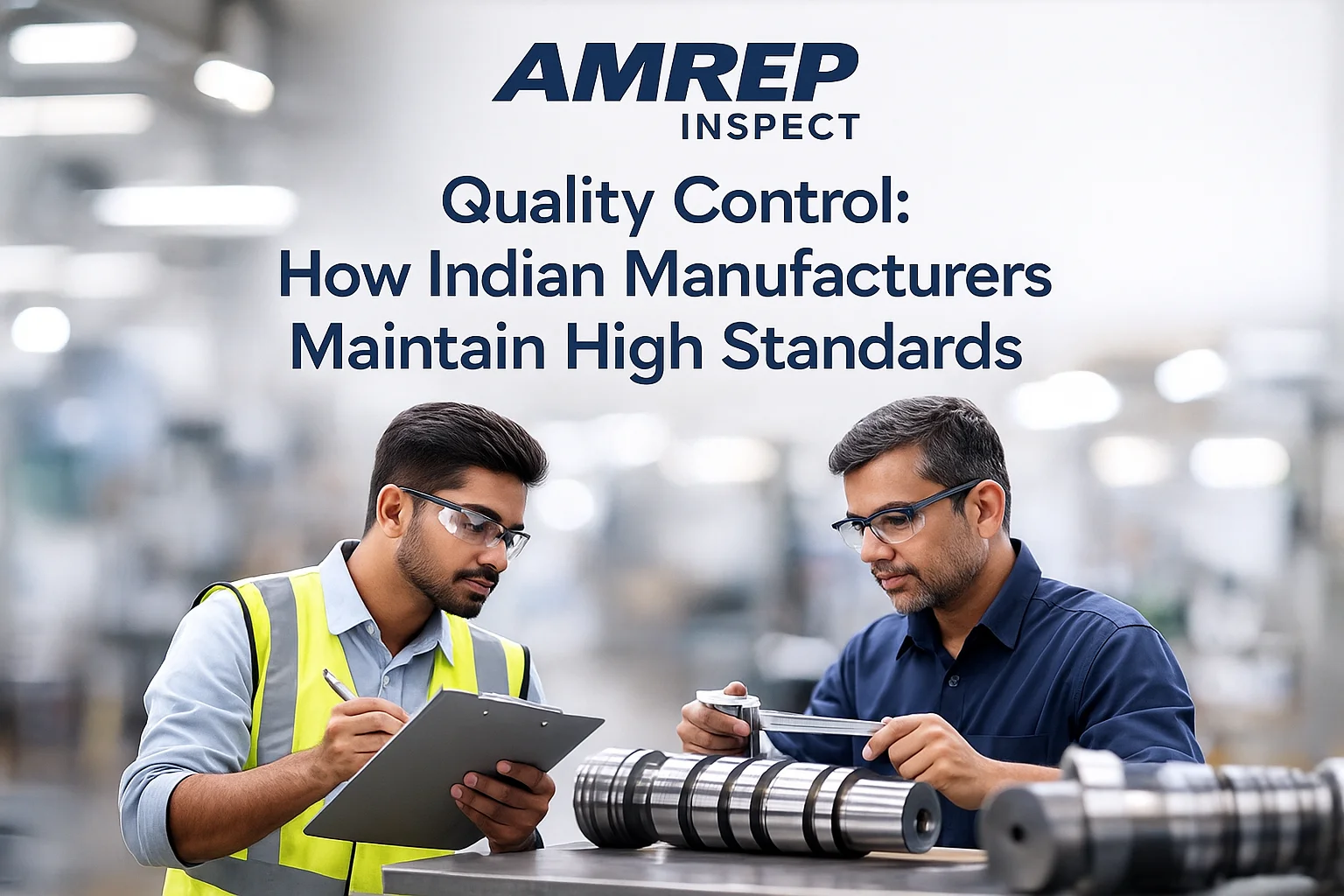
Quality has become the biggest differentiator for Indian companies. Global competition requires manufacturers to deliver consistency, reliability, and safety. Defective or substandard products can cause reputational damage, financial loss, legal penalties, and even safety hazards. Indian companies now understand that:
High quality increases customer trust
Better products attract international buyers
Strong quality control reduces waste and production costs
Verified quality helps companies scale faster
Compliance with standards opens access to global markets
Quality is no longer a box to tick. It is a strategic priority that supports long term growth.
India’s ability to produce high quality goods is rooted in strong systems and strict quality practices that guide every step from raw materials to final inspection.
One of the strongest reasons Indian manufacturers maintain high standards is the widespread adoption of internationally recognized quality management systems. These systems give companies a structured, step by step approach to ensure consistent output.
ISO 9001
The most widely implemented standard guiding companies on process control, documentation, and audit systems.
IATF 16949
A strict automotive industry standard that Indian auto suppliers must meet to work with global brands.
ISO 13485
Used by medical device manufacturers to ensure safety, accuracy, and compliance.
Good Manufacturing Practices
Used heavily in pharmaceuticals, food, and cosmetics.
These standards help companies create a strong foundation where every process is mapped, measured, and monitored. When an organization follows these systems correctly, quality becomes predictable and reliable.
Quality improves dramatically when production depends on precise machines instead of manual accuracy. Indian manufacturers have invested heavily in:
Computer numerically controlled machines
Robotics and automated assembly lines
Precision cutting and molding equipment
Smart sensors for real time monitoring
Computer aided quality inspection systems
Automation for packaging and labeling
Modern factories use sensors that monitor pressure, temperature, alignment, and speed to ensure that machines stay within defined limits. If anything goes out of range, the system immediately alerts operators. This reduces human error and keeps production consistent.
Indian manufacturers are rapidly adopting Industry 4.0 tools. These tools connect machines, workers, and data in real time.
Some digital tools used in smart Indian factories include:
Real time production monitoring
Data analytics for predictive maintenance
AI powered defect detection
Cloud based quality documentation
Digital checklists and inspection tools
Automated calibration tracking
These systems help manufacturers prevent defects before they occur. Instead of reacting to problems, companies use data to predict and avoid them.
Technology alone cannot guarantee quality. Indian manufacturers focus heavily on building a skilled workforce that understands product requirements and inspection methods.
Training Includes:
Machine handling
Quality inspection techniques
Safety protocols
Measurement and calibration
Reading engineering drawings
Root cause analysis methods
Companies conduct regular workshops and certification programs to keep workers updated. A trained workforce reduces errors, improves productivity, and maintains high standards throughout the process.
Quality control begins long before manufacturing starts. Indian companies follow strict supplier management procedures to ensure they receive high quality raw materials.
Steps include:
Supplier audits
Material certification checks
Sampling and testing
Dimensional inspection
Performance testing of materials
If raw materials do not meet the required criteria, production does not begin. This ensures that every product is built on a strong foundation.
Instead of relying only on final inspection, Indian manufacturers monitor quality during every stage of production.
In process checks include:
Dimensional inspection
Visual assessment
Functionality tests
Machine calibration checks
Operator self inspections
Supervisory inspections
This multi layer inspection system catches issues early, prevents large batches of defects, and ensures customer expectations are met.
Once production is completed, the product is tested extensively before packaging.
Final testing may include:
Load testing
Stress testing
Electrical performance checks
Chemical composition tests
Durability testing
Visual finishing inspection
Weight and dimension accuracy checks
Industries like automobiles and pharmaceuticals use advanced laboratories to ensure regulatory compliance. These final tests are essential for customer safety and product reliability.
India has strong regulatory agencies that enforce product quality and safety.
Examples include:
BIS for product safety
ARAI for automotive
FSSAI for food
CDSCO for pharmaceuticals
Companies that export must also follow European, American, and international regulations. This level of compliance ensures that Indian products meet global expectations.
Quality is an ongoing journey. Indian manufacturers collect customer feedback through surveys, complaints, service reports, and performance analysis.
Companies conduct:
Root cause analysis
Corrective and preventive action planning
Continuous improvement workshops
Data based performance reviews
This ensures that every issue becomes an opportunity to improve.
The biggest success factor for Indian manufacturing is the cultural shift toward quality. Companies encourage employees at every level to:
Report issues
Suggest improvements
Participate in audits
Take responsibility for accuracy
Reward systems recognize teams that uphold high standards. This culture ensures that quality is not limited to the quality department but embraced by the entire organization.
For a closer look at the processes that maintain product standards, you can read more about QC Inspections in India.
The future of Indian manufacturing is bright. With government initiatives, foreign investments, and a growing skilled workforce, India is poised to become a global quality leader.
Manufacturers are shifting from traditional inspection methods to smarter, data driven systems that improve accuracy and consistency.
Indian factories are adopting real time monitoring tools that track production at every stage. Smart sensors and digital dashboards highlight issues instantly which allows faster corrective action and reduces dependence on manual checks.
Artificial intelligence is becoming central to modern quality lines. AI based cameras and machine learning models identify defects with high precision and can predict potential failures by analyzing production patterns.
Predictive maintenance uses machine data to forecast breakdowns before they happen. This approach helps manufacturers avoid unexpected downtime and maintain consistent product quality.
Blockchain technology improves transparency across supply chains by recording every stage of production in a secure digital ledger. It is especially useful for industries like pharmaceuticals, food processing, and electronics where authenticity and traceability are essential.
Automation, robotics, and connected devices are turning Indian factories into smart manufacturing units. These tools streamline production, minimize errors, and support faster decision making.
As technology advances, quality control teams will require stronger digital skills. Companies are investing in workforce training to ensure professionals can handle modern tools and data driven processes.
With India emerging as a major export hub, compliance with international standards will become even more important. Manufacturers will adopt stricter certifications and advanced documentation systems to meet global expectations.
For a structured approach to choosing the right supplier, refer to 10 Things to Check Before Signing with a New Manufacturer.
Indian manufacturers maintain high standards through a combination of structured systems, modern technology, skilled workers, strong regulations, and a culture that values excellence. Quality control in India is not limited to catching defects. It is a continuous process that ensures products are safe, durable, reliable, and globally competitive. As India continues to modernize and innovate, its reputation for quality will only grow stronger.
AMREP continues to support manufacturers with expert inspections, reliable audits, and world class quality inspection services. With AMREP’s inspection expertise and deep industry insight, manufacturers can maintain the highest standards and confidently grow in international markets.
Contact Us To See What We Can Do
Call Us
Mon - Sat 9.00 - 18.00
Sunday Closed


12 - May 2025
12
May
2025
Malaysia is a premier manufacturing hub in Southeast Asia. According to the Malaysian Investment Development Authority (MIDA), “Malaysia, with its extensive trade....

22 - April 2025
22
April
2025
Healthcare is rapidly evolving, ensuring consistent and high-quality patient care. Total Quality Management (TQM) in healthcare is more than just a buzzword—it is a powerful....

16 - April 2025
16
April
2025
Total Quality Management (TQM) is a mindset that involves everyone in the organization working toward a common goal: achieving excellence through quality. From....


Our website uses cookies to improve your experience. Read our Cookie Policy for more information.