QC Inspections in India: Ensuring Product Standards and Consistency
By AMREP | Posted on November 18, 2025
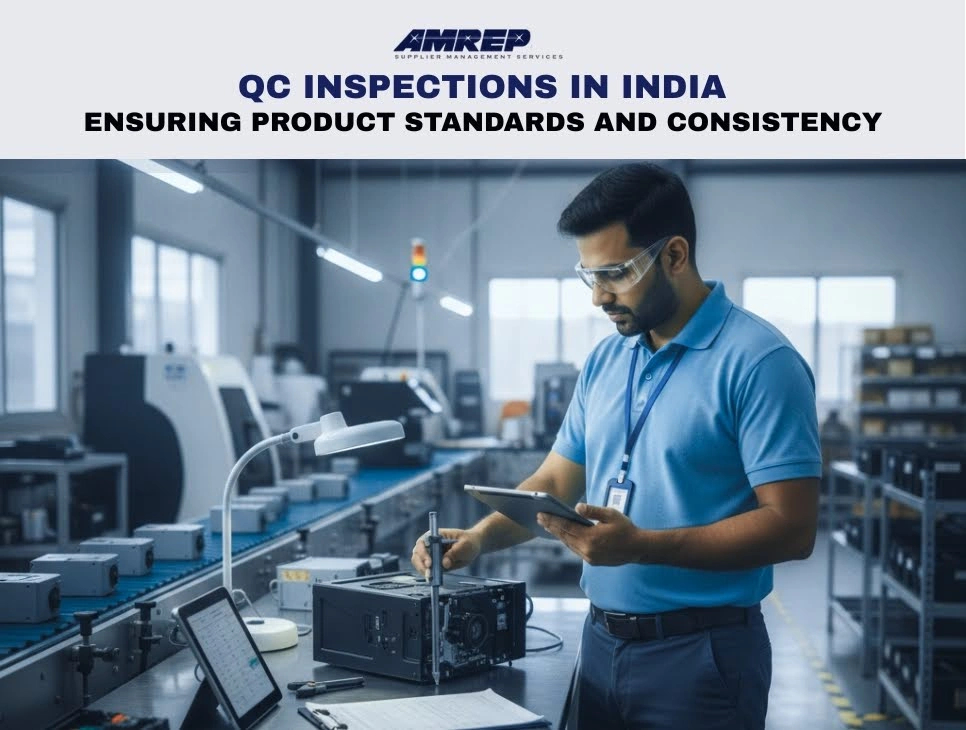
QC inspections in India play a crucial role in maintaining product standards and consistency by
monitoring every stage of production, from sourcing raw materials to evaluating finished goods. With
India supplying products to over 190 countries and its manufacturing sector contributing roughly 17% to
the nation’s GDP, ensuring consistent quality has become more important than ever.
QC Inspections rely on defined quality, clear benchmarks, defect classifications, and targeted checks
such as material verification, dimensional measurement, and functional testing. These steps help ensure
products meet customer expectations and regulatory requirements.
This blog explains why QC inspections in India matter and how they help ensure every shipment meets
required global quality standards.
As India’s manufacturing sector grows, maintaining consistent product quality is increasingly
challenging due to variations in factory capabilities and regional standards. QC inspections help
ensure products meet required specifications, comply with regulations, and ship without defects. Key
factors driving the need for QC in India include:
Rapid Expansion of India’s Manufacturing Sector
India now produces a broad range of goods, including textiles, engineering
components, electronics, pharmaceuticals, and automotive parts. As exports grow, manufacturers
face increased pressure to meet global quality standards and deliver consistent results.
Quality Variations Across Regions and Factories
Suppliers across India differ widely in skill, equipment, and production maturity,
leading to potential quality inconsistencies. Independent QC inspections help ensure products
align with buyer specifications, regardless of the region or factory producing them.
Risk Mitigation for International Buyers
QC inspections help detect defects, production issues, or compliance risks early on.
By resolving problems before shipment, buyers can avoid costly delays, minimize returns, and
maintain a more reliable and efficient supply chain.
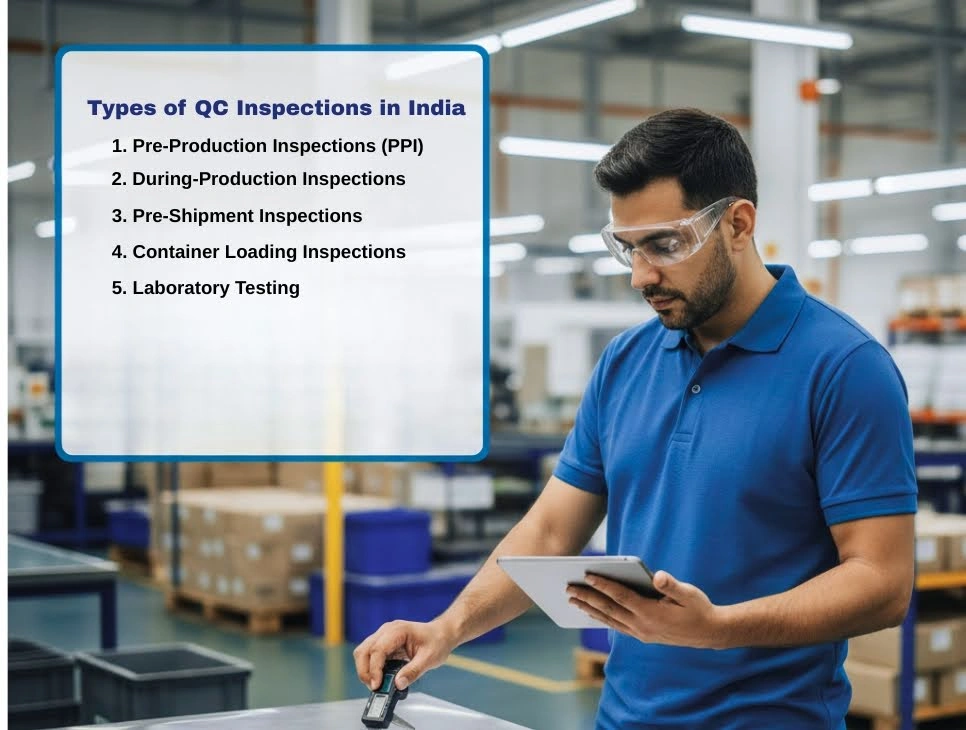
Types of QC Inspections in India
QC inspections in India cover every stage of the production cycle, helping businesses verify product
quality from start to finish. Each type of inspection serves a specific purpose in reducing defects,
ensuring compliance, and protecting shipment quality. The main types of inspections commonly used in
India include:
1. Pre-Production Inspections (PPI)
Before manufacturing begins, PPIs help verify that the factory is prepared to produce quality
goods. Inspectors check raw materials, review production plans, and confirm the factory’s
readiness to meet specifications.
Conducted when 20–60% of production is complete, DUPRO inspections monitor early batches to
catch issues before full-scale manufacturing. This helps reduce widespread defects and ensures
production timelines stay on track.
3. Pre-Shipment Inspections (PSI)
Performed once production is finished, PSIs involve detailed checks on product quality,
quantity, packaging, labeling, and safety. Inspectors use AQL sampling to determine whether the
shipment meets required standards before it leaves the factory.
4. Container Loading Inspections
These inspections confirm that finished products are loaded correctly, securely, and according
to order details. Proper monitoring reduces the risk of damage, loss, or mishandling during
transit.
5. Laboratory Testing (When Required)
For products requiring deeper validation, lab tests assess material safety, performance, and
regulatory compliance. These tests help ensure items meet standards for major markets such as
the US, EU, and the Middle East.
Key Quality Standards and Compliance
Requirements in India
To meet global expectations, Indian manufacturers must follow several quality standards and
regulatory guidelines that ensure product safety, consistency, and compliance. Key requirements
include:
1. ISO Standards (ISO 9001, ISO 14001, etc.)
Many factories follow ISO certifications such as ISO 9001 for quality management and ISO 14001
for environmental practices, helping maintain consistent processes and reliable production.
2. BIS (Bureau of Indian Standards) Requirements
BIS sets mandatory standards for products like electronics, toys, and appliances. Items under
the compulsory registration scheme must be tested and certified before being sold.
3. Industry-Specific Standards
Certain industries require specialized testing and regulations:
Textiles:
Fabric durability, colorfastness, chemical safety
Automotive:
AIS performance and safety standards
Food:
FSSAI hygiene and labeling requirements
Pharmaceuticals:
GMP and WHO-GMP guidelines
4. Buyer-Specific or Custom QC Checklists
Many brands use tailored QC checklists to ensure products meet their exact specifications and
market requirements, giving suppliers clear quality expectations throughout production.
How QC Inspections Work: Step-by-Step Process
QC inspections in India follow a structured, repeatable process to verify that products meet buyer
specifications and international standards. Below is how a typical inspection is carried out, from
preparation to final report.
Step 1: Define Requirements & Prepare the Checklist
Collect product specs, drawings, tolerances, and approved samples.
Note packaging, labeling, and shipping requirements.
Include regulatory or market-specific standards (e.g., CE, RoHS, REACH, FDA, etc.).
Set defect categories: critical, major, minor.
Build a detailed QC checklist that inspectors will follow on-site.
Step 2: Plan the Inspection & Confirm Production Status
Agree on the inspection date and location with the factory.
Confirm production stage and quantity ready for inspection (e.g., 20%, 50%, or 100%
finished).
Ensure enough units are available so sampling is meaningful.
Step 3: Select Samples Using AQL
Use AQL (Acceptable Quality Limit) and ISO 2859-1 tables to determine:
Sample size
Acceptable number of defects
Randomly select units from different cartons or pallets to avoid bias.
Apply stricter AQL levels for high-risk products like electronics or children’s items.
Step 4: Perform On-Site Product Checks
Inspectors carry out detailed checks based on the checklist, including:
Visual inspection
Surface defects, scratches, stains, poor stitching, color issues, etc.
Dimensional checks
Use tools like calipers, rulers, gauges, and measuring tapes.
Compare with drawings and tolerances.
Functional testing
Test moving parts, electronics, or mechanical functions.
Verify safety features where applicable.
Packaging and labeling checks
Confirm inner and outer packaging, barcodes, logos, and marking details.
Check carton strength, quantity per carton, and shipping marks.
Basic process and handling review
Observe storage, handling, and basic hygiene or safety in the factory to
spot process risks.
Step 5: Record Findings & Classify Defects
Note each defect and classify it as critical, major, or minor.
Count how many defects appear in the sample.
Compare results with AQL limits to see if the lot passes or fails.
Step 6: Create the Inspection Report
Compile all data into a structured report, including:
Product details and quantities inspected
Photos and, if needed, short videos
Measurement results and test outcomes
Defect list with classifications
Packaging and labeling verification
Provide a clear recommendation: Pass, Fail, or Pending/On Hold (e.g., if rework or
re-inspection is needed).
Step 7: Buyer Decision & Follow-Up
The buyer reviews the report and decides whether to:
Approve shipment
Request rework or sorting
Schedule a re-inspection
Reports are often stored and compared over time to track supplier performance and improve
long-term quality.
Common Quality Issues Found in Indian Factories
Quality variations can occur across India’s manufacturing sector due to differences in materials,
processes, and equipment. QC inspections help identify these problems early and ensure products meet
required standards. Common issues include:
Material Inconsistencies: Variations in raw materials, such as fabric
thickness, metal grade, or electronic components, can lead to uneven product quality.
Dimensional Errors: Incorrect measurements or tolerance deviations often result
from outdated machinery or poor calibration.
Workmanship Defects: Visible flaws like scratches, loose threads, dents, or
misaligned parts are frequently found in visual checks.
Functional Failures: Electronics and mechanical items may fail performance
tests due to weak components, poor assembly, or improper soldering.
Labeling and Packaging Mistakes: Incorrect barcodes, warnings, or packaging
configurations can cause compliance issues or shipping delays.
Production Delays or Process Deviations: Factories may deviate from approved
processes or fall behind schedule, affecting quality and consistency.
Non-Compliance With Standards: Some products fail to meet required
certifications such as CE, RoHS, REACH, or FDA, leading to shipment risks.
Tips for Importers and Businesses Conducting QC in India
To ensure smooth production and consistent quality, importers should follow a few best practices
when managing QC in India:
Provide a Clear QC Checklist: Share detailed specifications, tolerances,
packaging requirements, and reference samples to avoid misunderstandings.
Verify Supplier Certifications: Check for ISO, BIS, GMP, or industry-specific
certifications before placing orders.
Schedule Inspections at Key Stages: Use pre-production, during-production, and
pre-shipment inspections to catch issues early.
Use Independent Inspectors: Third-party QC companies offer objective
assessments and reduce factory bias.
Maintain Clear Communication: Regular updates and clear instructions keep
production aligned with your quality expectations.
Request Corrective Action Plans: When defects arise, ensure the factory
provides a plan to fix issues and prevent repeats.
Build Strong Supplier Relationships: Reliable suppliers are more responsive and
committed to meeting quality standards.
The Future of QC Inspections in India
As India continues to strengthen its position as a global manufacturing hub, QC inspections are
evolving to meet rising expectations for quality, compliance, and transparency. Several emerging
trends are shaping the future of QC in India:
Automation and Smart Manufacturing: Factories are increasingly adopting
automation, robotics, and digital monitoring systems, allowing for more consistent production
and faster detection of process issues.
AI-Powered Quality Control: Artificial intelligence and machine vision tools
are being used to identify defects more accurately, reduce human error, and accelerate
inspection processes.
IoT-Enabled Production Tracking: IoT sensors and connected devices provide
real-time data on production conditions, machine performance, and product quality, improving
traceability and process control.
Stricter Global Compliance Requirements: Export markets like the US, EU, and
Middle East are tightening safety, environmental, and testing standards, making thorough QC and
documentation more important than ever.
Growing Demand for Ethical and Sustainable Production: Brands are placing
greater emphasis on sustainability, worker safety, and responsible sourcing, areas where QC
inspections help verify claims and ensure compliance.
Benefits of Partnering With a Professional QC Inspection Company in India
Working with a professional QC inspection company helps businesses maintain consistent product
quality and reduce the risks associated with outsourcing production. These companies provide
expertise, impartiality, and structured processes that many factories may lack. Key benefits
include:
Local Expertise and Industry Knowledge: Professional inspectors understand
India’s manufacturing landscape, regional strengths, and common factory challenges. Their
experience helps identify issues that buyers might overlook.
Unbiased, Third-Party Assessment: Independent QC companies offer objective
evaluations, ensuring product quality is verified without the influence of factory interests or
internal pressures.
Early Detection of Defects: In onsite QC inspection, the companies catch issues
early, reducing mass defects, rework, and costly delays.
Improved Efficiency and Cost Savings: Identifying problems before shipment
prevents returns, shipping losses, and compliance penalties. This saves significant time and
costs for importers and brands.
Faster Communication and Clear Reporting: Professional inspection firms provide
structured reports with photos, measurements, defect classifications, and actionable
recommendations. This helps buyers make quick, informed decisions.
Better Supplier Accountability: Regular inspections motivate factories to
maintain higher standards, follow approved processes, and address recurring issues, leading to
more reliable production over time.
AMREP Inspect: Your Trusted Partner for Quality Control in India
QC inspections are essential for ensuring product quality in India’s fast-growing manufacturing
sector. With varying factory standards and rising global compliance requirements, inspections help
verify safety, consistency, and reliability. As expectations increase, strong QC oversight remains
crucial for protecting your supply chain and brand.
For dependable inspection support in India, AMREP Inspect offers professional, unbiased QC inspection services
designed to reduce defects, improve supplier performance, and ensure every shipment meets your
standards.
Contact AMREP Inspect today to ensure your product quality before it leaves the factory.
Malaysia is a premier manufacturing hub in Southeast Asia. According to the Malaysian
Investment Development Authority (MIDA), “Malaysia, with its extensive trade....
Healthcare is rapidly evolving, ensuring consistent and high-quality patient care. Total
Quality Management (TQM) in healthcare is more than just a buzzword—it is a powerful....
Total Quality Management (TQM) is a mindset that involves everyone in the organization
working toward a common goal: achieving excellence through quality. From....