Guide to Qualifying New Suppliers in Malaysia for Manufacturing Success
Malaysia is a premier manufacturing hub in Southeast Asia. According to the Malaysian Investment Development Authority (MIDA), “Malaysia, with its extensive trade....

By AMREP | Posted on February 13, 2026
ISO 9001:2015 is the world’s most widely adopted Quality Management System (QMS) standard. For manufacturers, it provides a structured framework to consistently produce quality products, meet customer and regulatory requirements, reduce defects, and improve operational efficiency.
Whether you manufacture components, assemblies, or finished goods, ISO 9001 helps ensure that quality is built into every stage of production, rather than being inspected at the end.
This guide explains ISO 9001:2015 Clauses 4–10 in clear, manufacturer-focused language, with practical examples and implementation tips to support certification and ongoing QMS improvement.
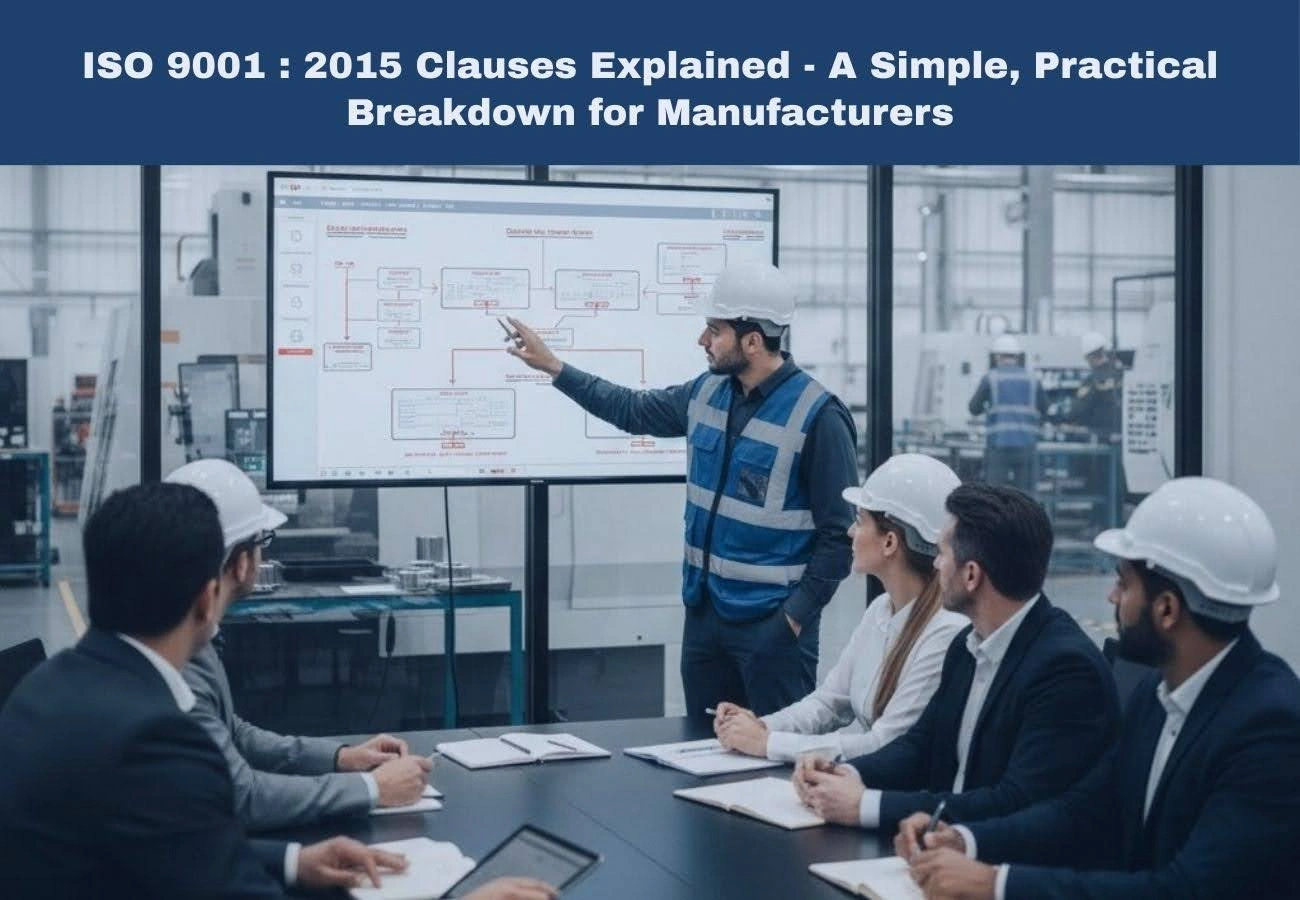
ISO 9001:2015 is an international standard that specifies requirements for a Quality Management System. It helps organizations:
Unlike earlier versions, ISO 9001:2015 emphasizes:
ISO 9001:2015 follows the Annex SL structure, which makes it easier to integrate with other ISO standards (ISO 14001, ISO 45001, etc.).The standard is organized into 10 clauses, but not all are certifiable requirements.
The certifiable requirements are in Clauses 4–10:
Let’s break them down one by one.
Purpose: Defines the purpose of ISO 9001 and the types of organizations it applies to.
Key Points:
Implementation Tip:
For manufacturers, clearly define what your QMS covers, e.g., “Design, manufacture, and assembly of industrial components at XYZ facility.” Keep it simple and specific.
Purpose: Lists other standards referenced by ISO 9001:2015.
Key Points:
Implementation Tip:
You don’t need to take any special action here other than ensuring your team understands key ISO terms.
Purpose: Provides definitions for the key concepts used in ISO 9001.
Key Points:
Implementation Tip:
Make a simple glossary for operators and managers to refer to, so everyone speaks the same “ISO language” on the shop floor.
Purpose: Understand your organisation’s environment and define your QMS scope.
Key Requirements:
Implementation Tip:
Use a SWOT analysis or risk register to capture challenges and opportunities. This forms the foundation for all subsequent QMS planning.
Purpose: Ensure top management drives the QMS and takes accountability.
Key Requirements:
Implementation Tip:
Embed ISO objectives into production KPIs, not just quality KPIs, to ensure leadership ownership.
Purpose: Identify risks, set quality objectives, and plan for change.
Key Requirements:
Implementation Tip:
Use a simple risk register integrated with shop floor operations. Focus on the highest-impact risks first.
Purpose: Provide the resources, competence, and infrastructure needed for quality.
Key Requirements:
Implementation Tip:
Use visual work instructions wherever possible to reduce errors and improve compliance on the shop floor.
Purpose: Control manufacturing processes to ensure consistent product quality.
Key Requirements:
Implementation Tip:
Traceability and inspection at every critical stage prevent defects and simplify corrective actions.
Purpose: Monitor, measure, analyze, and review QMS performance.
Key Requirements:
Implementation Tip:
Dashboards or simple Excel trackers work well, but data must be accurate and reviewed regularly.
Purpose: Ensure continual improvement of processes, products, and the QMS.
Key Requirements:
Implementation Tip:
ISO 9001 is not just about compliance—it’s a tool for operational excellence. Make improvement part of daily manufacturing activities.
| Phase | Timeline | Executive Focus | Key Outcomes |
|---|---|---|---|
| 1. Leadership & Direction | Weeks 1–2 | Ownership, scope, alignment | ISO lead appointed; QMS scope defined; business risks and stakeholders identified |
| 2. Gap & Process Assessment | Weeks 3–4 | Readiness & process clarity | ISO 9001 gap analysis completed; core manufacturing processes mapped |
| 3. QMS Design & Planning | Weeks 5–8 | System design & risk control | Quality policy and objectives set; risks addressed; essential QMS documents established |
| 4. Resources & Competence | Weeks 9–10 | Capability & accuracy | Calibration system in place; workforce competence defined and trained |
| 5. Operational Control | Weeks 11–14 | Shop-floor execution | Controlled production, inspection, supplier management, and nonconformance handling |
| 6. Performance Review | Weeks 15–16 | Measurement & oversight | KPIs tracked; internal audits completed; management review conducted |
| 7. Improvement & Certification | Weeks 17–20 | Readiness & certification | Corrective actions closed; pre-audit completed; certification audit passed |
Many manufacturers face delays, audit failures, or ineffective systems due to common implementation pitfalls. Understanding and avoiding these mistakes is essential to building a practical, audit-ready Quality Management System.
Treating ISO 9001 as a paperwork exercise
Focusing on documents instead of process control creates systems that fail on the shop floor. ISO must reflect how manufacturing actually operates.
Limited leadership involvement
When top management delegates ISO entirely to the quality team, ownership is lost, and audits become superficial.
Skipping organizational context and scope definition
Starting with procedures before defining scope, risks, and processes leads to misalignment and unnecessary controls.
Over-documentation
Excessive SOPs and forms overwhelm operators and reduce compliance. Simple, visual work instructions are more effective.
Ignoring risk-based thinking
Failing to identify risks in purchasing, production, and inspection allows recurring defects and disruptions.
Weak calibration control
Expired or missing calibration records are a common source of major nonconformities during audits.
Inadequate training and competence management
Untrained or uncertified operators cause inconsistent quality and rework.
Poor supplier control
Treating all suppliers the same—or not evaluating them at all—introduces avoidable quality issues into production.
Internal audits done only for compliance
Box-ticking audits miss real improvement opportunities and weaken the system.
Viewing certification as the finish line
ISO 9001 is a continual improvement framework, not a one-time certificate.
For more ways to streamline production, check out our Lean Manufacturing Tools List: 15 Tools Explained with Practical Use Cases.
Learn how manufacturers uphold excellence in their operations in our Quality Control: How Indian Manufacturers Maintain High Standards guide.
ISO 9001:2015 is more than a certification. It is a practical framework that helps manufacturers ensure consistent quality, improve efficiency, and drive continual improvement while building a robust, audit-ready QMS.
Amrep Inspect provides comprehensive quality management services, including ISO 9001 implementation support, gap analysis, internal audits, training, and ongoing QMS optimization tailored for manufacturers.
Contact Amrep Inspect today to streamline your ISO 9001 journey, strengthen compliance, and enhance manufacturing performance.
Contact Us To See What We Can Do
Call Us
Mon - Sat 9.00 - 18.00
Sunday Closed


12 - May 2025
12
May
2025
Malaysia is a premier manufacturing hub in Southeast Asia. According to the Malaysian Investment Development Authority (MIDA), “Malaysia, with its extensive trade....

22 - April 2025
22
April
2025
Healthcare is rapidly evolving, ensuring consistent and high-quality patient care. Total Quality Management (TQM) in healthcare is more than just a buzzword—it is a powerful....
16 - April 2025
16
April
2025
Total Quality Management (TQM) is a mindset that involves everyone in the organization working toward a common goal: achieving excellence through quality. From....


Our website uses cookies to improve your experience. Read our Cookie Policy for more information.